
Every therapist will have had this experience. A client arrives a little cooler than usual, and you realise that something you said last week has landed badly. Or a client who has been open and engaged starts to go quiet, cancels a session, or becomes unusually agreeable, saying all the right things while something important seems to have quietly left the room.
These are ruptures, and they happen in every therapeutic relationship, however skilled or experienced the therapist. After nearly three decades in practice, I am still struck by how easy it is to feel that a rupture means something has gone wrong, and by how often the most meaningful work turns out to happen in the moments that follow.
Want to learn more? Join the upcoming training “Rupture and Repair in the Therapeutic Relationship” with Teresa Finlay, taking place on Friday 26th February 2027.
What do we mean by rupture?
In simple terms, a rupture is a moment when trust, understanding or connection between therapist and client becomes strained or breaks down. Repair is the process of noticing that strain, talking about it openly, and working through it together in a way that rebuilds trust and, very often, deepens the relationship.
Jeremy Safran and Christopher Muran, whose research has shaped much of our thinking in this area, describe two broad kinds of rupture. Confrontation ruptures are the ones we tend to notice: a client becomes angry, critical or challenging, questions whether therapy is helping or pushes back against us directly. Withdrawal ruptures are quieter and much easier to miss. The client moves away rather than against, perhaps by changing the subject, giving vague or overly compliant answers, arriving late, or simply drifting out of contact.
It is often the withdrawal ruptures that catch us out. The polite, cooperative client who never complains can be the one who disappears after session six without explanation, leaving us wondering what we missed. Left unaddressed, ruptures of either kind can lead to disengagement, misunderstanding and premature endings.
Why ruptures can be the work, not a detour from it
There is a reassuring body of research here. Studies of the therapeutic alliance have consistently found that ruptures which are noticed and worked through are associated with better outcomes. In other words, a relationship that has been through a difficult moment and come out the other side can be stronger than one that never wobbled at all. This makes a great deal of sense from a developmental point of view. Ed Tronick’s research on parents and infants found that even in healthy relationships, the two are out of sync much of the time. What matters is not perfect attunement, but the repeated experience of mismatch followed by repair. Through that cycle, a child learns that relationships can survive disconnection, that their feelings can be noticed, and that someone will come back towards them.
Coming from a psychodynamic and attachment informed background, this is where the idea really comes alive for me. Many of our clients grew up in environments where misattunement was never acknowledged, or where conflict led to punishment, withdrawal of love, or abandonment. For them, the experience of a therapist saying, in effect, “I think something went wrong between us last week, and I’d like to understand it” can be genuinely new. It offers a lived experience of relationship that is very different from what they have known, and that can be more powerful than any interpretation.
The therapist’s part in it
Ruptures are never one sided. They happen between two people, and they stir things up in both of them. As therapists, we bring our own histories, sensitivities and blind spots into the room, and a rupture can touch those quite directly. We might find ourselves rushing to explain or defend what we meant, apologising so quickly that the client’s experience never really gets explored, or feeling a pull to smooth things over and move on.
In supervision, I notice how often a rupture is brought with a sense of having failed, sometimes with real shame attached. That shame is understandable, but it tends to shut down exactly the curiosity that repair depends on.
If we can hold onto a more open, interested stance, wondering what happened for the client, what happened for us, and what happened in the space between, the rupture becomes something we can think about together rather than something to be survived.
This is where mentalization based thinking is so useful. A mentalizing stance is one of curiosity about our own minds and the minds of others, held with a certain humility about how little we can know for sure. It is also the capacity that tends to go offline first under emotional pressure, which is precisely the state many of us are in when a client is angry with us or quietly pulling away. Learning to recover that reflective capacity in the moment, rather than only afterwards in supervision, can make a real difference to how repair unfolds.
Finding our way back
Ruptures are an inevitable part of therapeutic work, and they can be uncomfortable for everyone involved. But handled with care and curiosity, they are also some of the richest moments we have with our clients, opportunities to show, rather than tell, that a relationship can bend without breaking. If you would like to feel more confident and less anxious when those moments arrive, I’d like to invite you to our workshop on Rupture and Repair with Teresa Finlay.
About the workshop
If this is an area you would like to explore in more depth, we are delighted to be running “Rupture and Repair in the Therapeutic Relationship” with Teresa Finlay on Friday 26th February 2027. It is a one-day online workshop, delivered via Zoom from 10am to 4pm (UK time), offering a focused introduction to working with rupture and repair through relational, attachment and mentalization based approaches.
Teresa will look at rupture through an intersubjective lens, encouraging curiosity about what gets stirred up and activated in both client and therapist. The day will help you respond to ruptures with curiosity, emotional attunement and reflective capacity, and explore how therapists and clients can make sense of their triggers and vulnerabilities without shame or blame. There will be a particular focus on keeping a mentalizing stance when things feel pressured, and on facilitating repair processes that strengthen the relationship and support lasting change.
The workshop is suitable for experienced therapists as well as those in training or newly qualified, from any modality. If you cannot make the live date, the recording will be available on catch-up for 28 days afterwards.
You can find full details and book your place here: Rupture and Repair in the Therapeutic Relationship
Join our Therapy Community on Facebook
Brighton Therapy Partnership has a private Facebook Group for therapists which might be of interest to you if you are on social media? We currently have over 3.0k members. You will need to answer all 3 Joining Questions and agree to the Group Rules to join the Group!
Click Here to Join *The Therapy Partnership* Facebook Group – Be Part of the Therapy Community!
Latest Courses

Intrusive Thoughts: A Treatment Guide
Deepen your understanding and therapeutic approach to intrusive thoughts across OCD, anxiety and trauma, transforming your confidence and clinical skills in supporting clients. Saturday 28th November 2026. ONLINE CPD Training…

Understanding & Working with Addiction in Therapy
Reframe everything you thought you knew about addiction and unlock a powerful relational approach to transform your therapeutic work, with Sarah Pennock. Saturday 6th February 2027. Online CPD Training for…
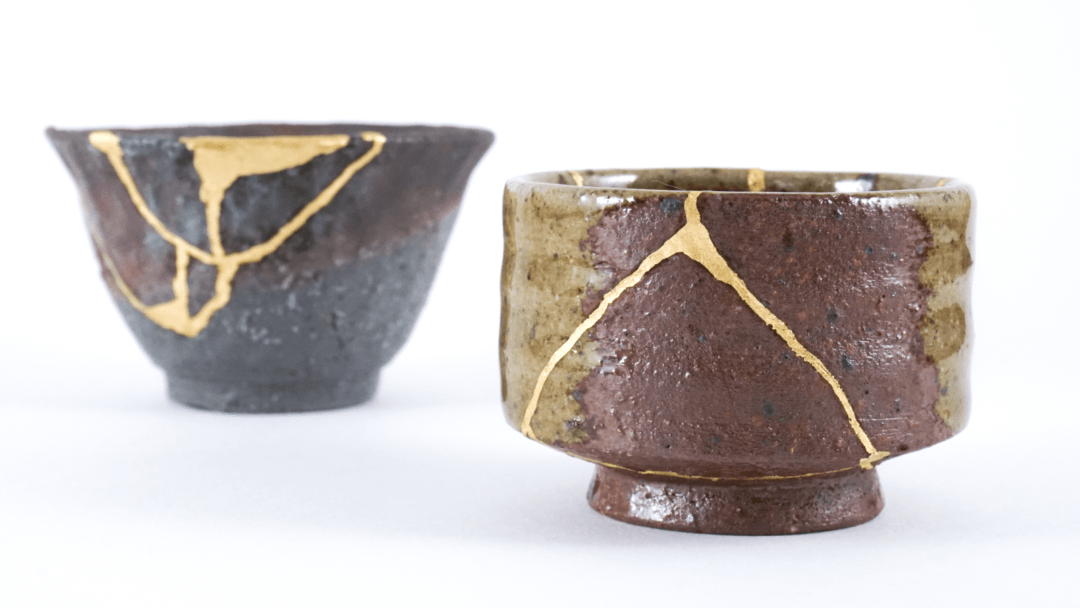
Rupture and Repair in the Therapeutic Relationship
Discover how to transform moments of disconnection and misunderstanding in the therapeutic relationship into powerful opportunities for healing and change, with Teresa Finlay. Friday 26th February 2027. Online CPD Training…
Get 20% off your first workshop
Join the BTP mailing list and receive a 20% discount code for your first booking — plus early access to new events, blogs & articles, CPD resources, and insights from our expert trainers, straight to your inbox. No spam. Unsubscribe any time.

Therapy Education Online
ThEO is part of Brighton Therapy Partnership
Many of Brighton Therapy Partnership's live events are uploaded to our online library, Therapy Education Online (ThEO).
Therapy Education Online brings the very best of counselling and psychotherapy training to a global audience.
See the full library of training courses through the link below.
Get 20% off your first workshop
Join the BTP mailing list and receive a 20% discount code for your first booking — plus early access to new events, blogs & articles, CPD resources, and insights from our expert trainers, straight to your inbox. No spam. Unsubscribe any time.
Therapy Education Online
ThEO is part of Brighton Therapy Partnership
Many of Brighton Therapy Partnership's live events are uploaded to our online library, Therapy Education Online (ThEO).
Therapy Education Online brings the very best of counselling and psychotherapy training to a global audience.
See the full library of training courses through the link below.
Before submitting, please take note of our community guidelines.