
The internet can be both a treasure trove of insightful content and entertainment, and also a source of overwhelming information. That’s why the BTP team has come together to curate a Therapist‘s Corner post for you.
This Autumn’s Therapist‘s Corner includes a selection of the best TV shows, books, podcasts, blogs, resources, quotes and memes (both classic and new) that we’ve come across to support you in your therapy and counselling work.
Our goal is to educate, inform and occasionally bring a smile to your face, and make your online experience a little more enjoyable.
🍁Enjoy sipping your tea or coffee and Happy Reading!☕️
 TV/Cinema
Dear England (2026)

Carrie (2026)
The new Prime Video series Carrie is an 8-episode supernatural horror and teen drama miniseries based on Stephen King’s 1974 novel.
 Books
Books
“Anxiety is Your Wake-Up Call: Stop Fighting, Start Listening” – Paul Sheppard
In this book Paul Sheppard offers a radically different approach to managing mental distress by reframing anxiety not as an enemy to defeat, but as a vital internal signal. Drawing on years of personal insight and clinical experience helping individuals navigate panic, Sheppard explains that chronic worry and physical symptoms are actually the mind’s way of indicating that an important lifestyle shift or boundary change is desperately needed.
Instead of fighting or resisting uncomfortable sensations—which only triggers a greater physiological adrenaline spike – the book provides actionable strategies to improve emotional tolerance, navigate intense moments, and decode the underlying message of your stress. By shifting from constant resistance to active, mindful listening, readers are guided to build long-term emotional fortitude, clear up mental clutter, and reclaim a genuine sense of calm and confidence.
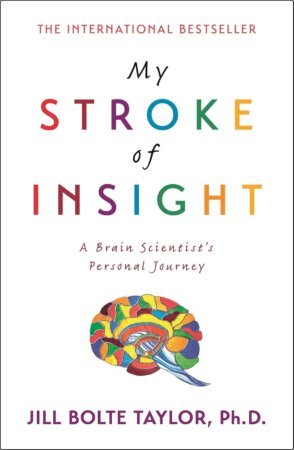
“My Stroke of Insight” – Dr Jill Bolte Taylor
“The Psychology of Transference” – Carl Jung

“Polysecure: Attachment, Trauma and Consensual Non-monogamy” – Jessica Fern
Polysecure by Jessica Fern is a trailblazing text that extends traditional attachment theory into alternative relationship structures. Fern challenges the mainstream view of emotional bonding by demonstrating that individuals can successfully cultivate secure attachments with multiple partners simultaneously. She maps out how childhood blueprints and sociocultural traumas shape adult intimacy, jealousy, and boundaries within open relationships.
The book introduces the pioneering HEARTS framework to help readers build internal and relational security. This model shifts the definition of security away from structural milestones like marriage and toward active practices like attunement, shared rituals, and self-security. It provides clinicians with a concrete guide to help clients navigate multi-partner complexities, heal trauma, and actively foster emotional safety.
“Everybody Lies: What the Internet Can Tell Us About Who We Really Are” – Seth Stephens-Davidowitz

Recommended Podcasts
“Hidden Brain” – Shankar Vedantam

Hidden Brain is a podcast about psychology, behavioral science, and the unseen forces that shape human decisions and relationships. Hosted by Shankar Vedantam, it combines scientific research with narrative storytelling to explain why people think, feel, and act the way they do, and has become one of the most widely recognized shows in its genre.
It can offer fresh perspectives on the people we work with, without feeling like another professional training session.
“Speaking of Psychology” – American Psychology Association
Speaking of Psychology is the official podcast of the American Psychological Association (APA), featuring conversations with psychologists and other experts about human behavior, mental health, relationships, work, learning, and current research. It is designed to make psychological science accessible to a broad audience, with episodes that connect research findings to everyday life and public issues.
he show explores a wide range of topics through interview-style episodes. Common themes include stress and resilience, sleep, anxiety and depression, child development, aging, technology’s effects on behavior, social psychology, and the science behind habits and decision-making.
Infographic
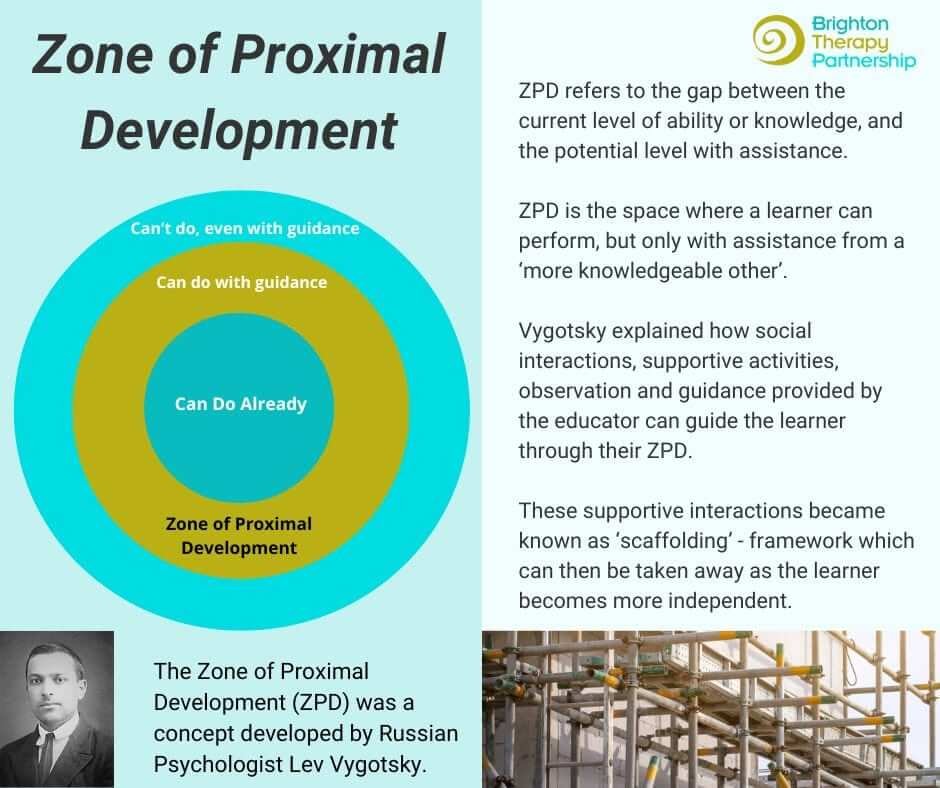
How do we recognise the edge of a client’s current capacity without pushing them beyond what feels manageable?
How can we balance offering support and guidance with allowing clients the space to discover their own resources and capabilities?
How might creativity, metaphor or art-making help clients express something they cannot yet put into words?
A final thought to reflect on: Perhaps therapeutic growth often happens in the space between “I cannot do this alone yet” and “I am beginning to discover that I can.” Our role is not to do the work for our clients, but to offer the relationship, support and conditions in which new possibilities can emerge.
Meme – For a Chuckle

Words to Ponder: Jed Diamond
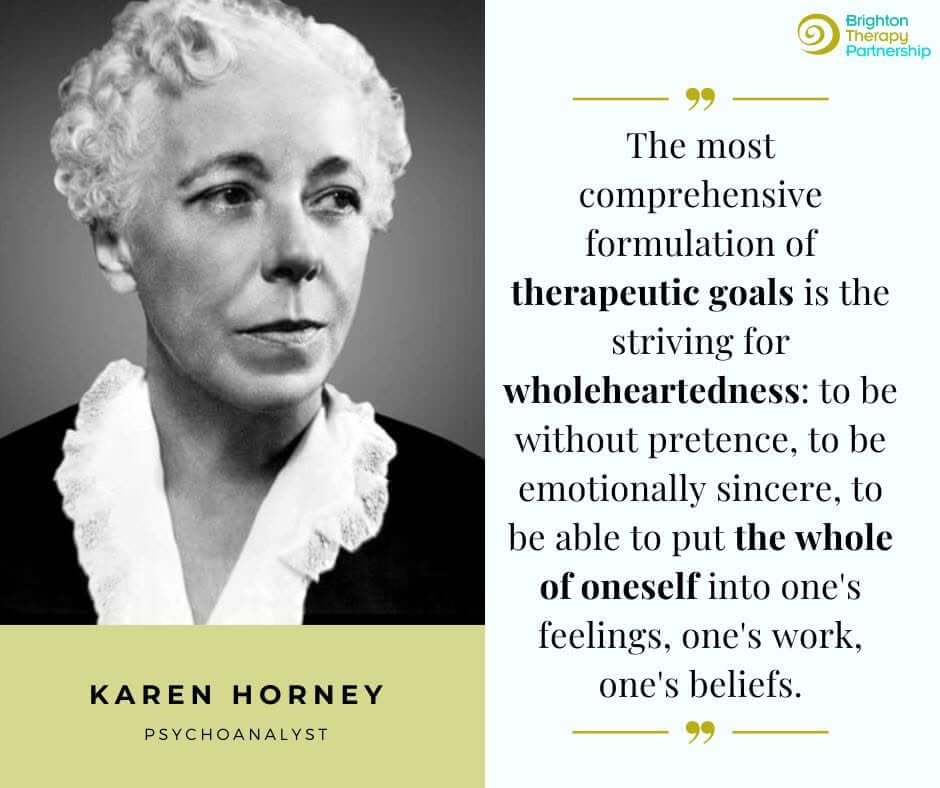
Karen Horney’s reflection on wholeheartedness invites us to consider what it means to be fully present, both in our personal lives and in our therapeutic work.
As therapists and counsellors, we spend much of our time creating space for others to explore their feelings, contradictions and vulnerabilities. But how do we relate to these aspects of ourselves? What does it mean to show up authentically in the therapeutic relationship, while remaining mindful of our own boundaries, biases and emotional responses? Perhaps wholeheartedness is not about striving for perfection or having all the answers, but about cultivating the courage to meet ourselves and others with honesty, curiosity and compassion.
How might our own capacity for wholeheartedness shape the spaces we create for others to do the same?
 Our Selected Blog Post: Transference and Countertransference

Learning to tell these apart, and to ask ourselves whose feeling this actually is, can transform a confusing countertransference reaction into an extremely useful piece of clinical information.
There are a handful of terms in psychotherapy that get used so often they start to lose their meaning. Transference and countertransference are two of them. We use them a lot but if you got a room full of us therapists together, we’d give you varying definitions of what they mean.
If you have ever sat in a session and felt a wave of irritation you could not quite account for, or noticed yourself unexpectedly sleepy, you already know what we’re about to discuss. Understanding what is happening in those moments, and learning to use the information, can be a challenging aspect of our therapy work.
 Blogs, Training, Socials and More
 Don’t forget we have a library full of therapy-related articles and blogs on our website. Have a browse, or search for something specific.
Join the BTP community on Facebook to connect with over 2.5K fellow therapists and counsellors.
 Join Brighton Therapy Partnership on YouTube by subscribing to our channel.
Click here for BTP’s upcoming live and online CPD trainings in 2026 or see thumbnails below this blog.
* There are affiliate links in this post, if you buy a book using one of these affiliate links we will get a very small fee. It all helps! Thank you!
Latest Courses

Healing Traumatic Memory: Essential Skills
This workshop takes a healing-centred, non-narrative approach to trauma, drawing on Somatic Experiencing, EMDR, and IFS to support affect regulation and help clients restore safety and wholeness. With Tracy Jarvis.…

Transference and Countertransference
Unlock the hidden power of transference and countertransference and discover how these fascinating unconscious dynamics can transform your clinical work, with Victoria Settle. Friday 6th November 2026. Online CPD Training…

Intrusive Thoughts: A Treatment Guide
Deepen your understanding and therapeutic approach to intrusive thoughts across OCD, anxiety and trauma, transforming your confidence and clinical skills in supporting clients. Saturday 28th November 2026. ONLINE CPD Training…
Get 20% off your first workshop
Join the BTP mailing list and receive a 20% discount code for your first booking — plus early access to new events, blogs & articles, CPD resources, and insights from our expert trainers, straight to your inbox. No spam. Unsubscribe any time.
Therapy Education Online
ThEO is part of Brighton Therapy Partnership
Many of Brighton Therapy Partnership's live events are uploaded to our online library, Therapy Education Online (ThEO).
Therapy Education Online brings the very best of counselling and psychotherapy training to a global audience.
See the full library of training courses through the link below.
Get 20% off your first workshop
Join the BTP mailing list and receive a 20% discount code for your first booking — plus early access to new events, blogs & articles, CPD resources, and insights from our expert trainers, straight to your inbox. No spam. Unsubscribe any time.
Therapy Education Online
ThEO is part of Brighton Therapy Partnership
Many of Brighton Therapy Partnership's live events are uploaded to our online library, Therapy Education Online (ThEO).
Therapy Education Online brings the very best of counselling and psychotherapy training to a global audience.
See the full library of training courses through the link below.
Before submitting, please take note of our community guidelines.