
Eating disorders are rarely just about food. They often reflect complex relationships with the body, identity, attachment, emotion, trauma, control, and culture. As therapists, we’re invited to look beyond symptoms and into the deeper meanings that disordered eating can hold for each individual.
Whether you work with eating disorders regularly or occasionally encounter them in your practice, continuing to expand your understanding can help you respond with greater confidence, curiosity, and compassion.
The books in this collection offer a diverse range of perspectives – from psychodynamic theory and feminist thought to recovery-focused approaches and powerful first-person narratives.
Together, they remind us that there is no single way to understand or treat eating disorders, but that thoughtful, informed, and relational practice can make a profound difference.
Learn more about this topic in our online CPD workshop: *Working Therapeutically with Disordered Eating and Eating Disorders*with Prof. Julia Buckroyd happening on Friday 2nd October 2026 from 10.00am – 4.00pm where we will explore the emotional and psychological roots of disordered eating and gain essential therapeutic skills to help clients develop a healthier relationship with food.
1. Male Eating Disorders: Experiences of Food, Body and Self– Russell Delderfield (2018)
A more recent, qualitative account built from men’s own descriptions of their experience of disordered eating, set against masculinity, stigma and control. A good counterbalance to the clinical literature, giving a first-person sense of what this can feel like for male clients.
2. Integrated Treatment of Eating Disorders: Beyond the Body Betrayed, Kathryn Zerbe (2008)
Zerbe brings together psychodynamic, attachment and biological perspectives into a single integrated model. For therapists who want to hold complexity rather than settle on one theoretical lens, this is a thoughtful, well-regarded synthesis.
3. Eating Your Heart Out: The Emotional Meaning of Eating Disorders, Julia Buckroyd (1989)
Written by Professor Julia Buckroyd, our workshop trainer, this remains one of the clearest accounts of the psychological function that disordered eating can serve. Buckroyd draws on decades of clinical experience to help therapists move past the visible symptoms and think about what the relationship with food is doing for the client emotionally.
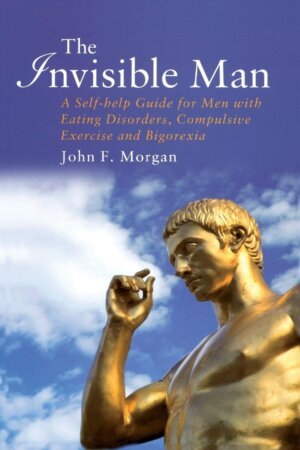
4. The Invisible Man: A Self-Help Guide for Men With Eating Disorders, Compulsive Exercise and Bigorexia, John F. Morgan (2008)
5. Appetites: Why Women Want, Caroline Knapp (2003)
Part memoir, part cultural exploration, this book looks at appetite, desire and control as they show up across eating, love and ambition. A good reminder that disordered eating rarely stays confined to food, and often threads through much wider questions of wanting and self-restriction.
6. Hungers and Compulsions: The Psychodynamic Treatment of Eating Disorders and Addictions – edited by Jean Petrucelli and Catherine Stuart (2001)
A collection of essays from relationally-minded psychoanalytic clinicians, exploring what eating and body symptoms communicate within the therapeutic relationship. Rich rather than prescriptive, it rewards dipping into over time as this material comes up in your own practice.
7. 8 Keys to Recovery from an Eating Disorder, Carolyn Costin and Gwen Schubert Grabb (2011)
Written by a therapist and a former client working together, this book bridges clinical insight and lived experience. It’s a useful one to know about for client recommendations too, as it speaks directly and compassionately to people further along the spectrum toward a diagnosable eating disorder.
8. Eating in the Light of the Moon: How Women Can Transform Their Relationship with Food Through Myths, Metaphors and Storytelling, Anita Johnston (2000)
A gentler, more symbolic route into the subject, using story and metaphor to help therapists (and clients) understand disordered eating as a form of unspoken communication. Popular with practitioners who want a way of talking about this material that doesn’t rely on diagnostic language.
9. Women Food and God: An Unexpected Path to Almost Everything, Geneen Roth (2010)
Roth writes about the everyday, culturally normalised end of disordered eating, the compulsive dieting, bingeing and rule-making that so many clients live with quietly. It’s an accessible read that helps therapists recognise these patterns even when they’re not the presenting issue.
10. Fat Is a Feminist Issue, Susie Orbach (1978)
A landmark text that reframed compulsive eating as a response to social and psychological pressures rather than a matter of willpower. Decades on, its central argument, that eating difficulties are often about far more than food, still shapes how many therapists approach this work.
Upcoming Workshop with Prof. Julia Buckroyd
Want to explore more? Join us for the upcoming training *Working Therapeutically with Disordered Eating and Eating Disorders*with Prof. Julia Buckroyd happening on Friday 2nd October 2026 from 10.00am – 4.00pm.
This workshop offers a general introduction to working with clients who are experiencing disordered eating or an eating disorder. It aims to offer a conceptual framework for understanding the misuse of food, using attachment theory, and then to offer a wide range of strategies for working with clients.
Central areas for consideration include, emotional language, attachment history, self-esteem, body esteem and identity, relationships and self-soothing. The workshop is active and interactive; participants should be willing to reflect on their own eating behaviour and attachment history as well as that of their clients.
Can’t make the date? Watch the recording on CATCH-UP for 28 days.
Join our Therapy Community on Facebook
Brighton Therapy Partnership has a private Facebook Group for therapists which might be of interest to you if you are on social media? We currently have over 2,5k members. You will need to answer all 3 Joining Questions and agree to the Group Rules to join the Group!
Click Here to Join *The Therapy Partnership* Facebook Group – Be Part of the Therapy Community!
* There are affiliate links in this post, if you buy a book using one of these affiliate links we will get a very small fee. It all helps! Thank you!
Latest Courses

Transference and Countertransference
Unlock the hidden power of transference and countertransference and discover how these fascinating unconscious dynamics can transform your clinical work, with Victoria Settle. Friday 6th November 2026. Online CPD Training…
Intrusive Thoughts: A Treatment Guide
Deepen your understanding and therapeutic approach to intrusive thoughts across OCD, anxiety and trauma, transforming your confidence and clinical skills in supporting clients. Saturday 28th November 2026. ONLINE CPD Training…
Understanding & Working with Addiction in Therapy
Reframe everything you thought you knew about addiction and unlock a powerful relational approach to transform your therapeutic work, with Sarah Pennock. Saturday 6th February 2027. Online CPD Training for…
Get 20% off your first workshop
Join the BTP mailing list and receive a 20% discount code for your first booking — plus early access to new events, blogs & articles, CPD resources, and insights from our expert trainers, straight to your inbox. No spam. Unsubscribe any time.
Therapy Education Online
ThEO is part of Brighton Therapy Partnership
Many of Brighton Therapy Partnership's live events are uploaded to our online library, Therapy Education Online (ThEO).
Therapy Education Online brings the very best of counselling and psychotherapy training to a global audience.
See the full library of training courses through the link below.
Get 20% off your first workshop
Join the BTP mailing list and receive a 20% discount code for your first booking — plus early access to new events, blogs & articles, CPD resources, and insights from our expert trainers, straight to your inbox. No spam. Unsubscribe any time.
Therapy Education Online
ThEO is part of Brighton Therapy Partnership
Many of Brighton Therapy Partnership's live events are uploaded to our online library, Therapy Education Online (ThEO).
Therapy Education Online brings the very best of counselling and psychotherapy training to a global audience.
See the full library of training courses through the link below.
Before submitting, please take note of our community guidelines.